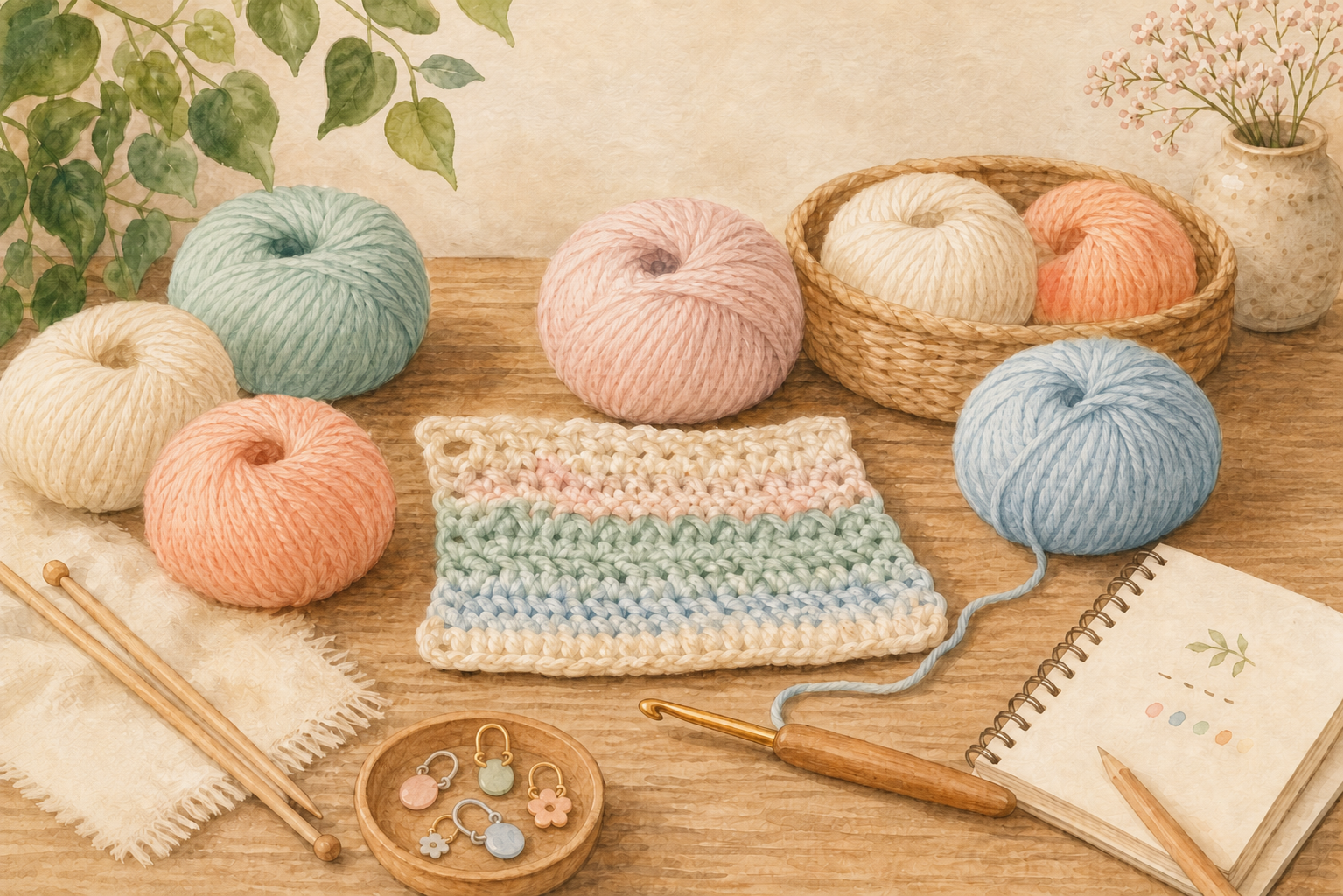
You know that little thrill when a cotton yarn comes in every color you could possibly need? Suddenly you’re mentally making a market bag, a baby cardigan, three dishcloths, and possibly a tiny emotional-support coaster.
Then the practical part of your brain taps the microphone and asks: wait, what should I actually make with DK cotton yarn?
Good question. Cotton DK is lovely, useful, washable, and very good at showing off stitches. It’s also less stretchy than wool, which means it can turn a fitted ribbed sweater into a gently sagging life lesson if you ask it to do the wrong job.
This guide will help you choose projects that suit cotton DK instead of fighting it. We’ll use Paintbox Yarns Cotton DK as the example because LoveCrafts currently has it near the top of its yarn listing, but this isn’t a sales pitch. The point is the yarn behavior: 100% cotton, DK weight, washable, colorful, and crisp enough for everyday projects.
Quick answer: what is DK cotton yarn good for?
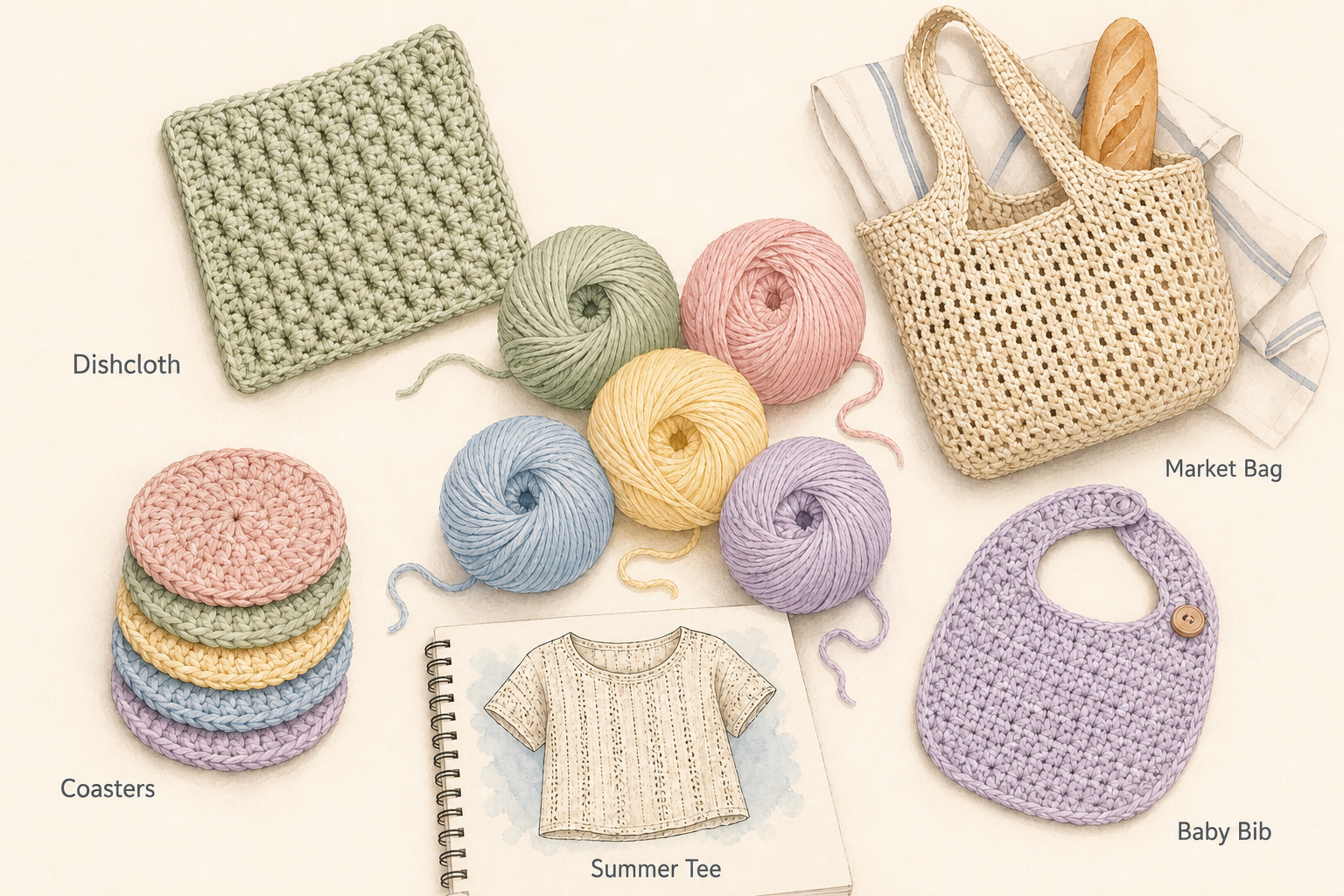
DK cotton yarn is best for projects that benefit from washability, drape, coolness, and clear stitch definition.
Try it for:
- dishcloths and washcloths
- market bags and totes
- coasters, mug rugs, and small home bits
- baby bibs and lightweight baby blankets
- summer tops and tanks
- relaxed cardigans or coverups
- amigurumi and toys that need neat stitches
- granny squares and colorwork motifs
- plant hangers, baskets, and decorative pieces
Be more cautious with:
- tight ribbing that needs to snap back
- fitted hats
- structured cables
- socks
- heavy sweaters that need elasticity
- anything where stretch and memory carry the fit
Cotton can be wonderful. It just has boundaries. Honestly, relatable.
Why cotton DK behaves differently from wool or acrylic
Cotton is a plant fiber, and plant fibers usually have less bounce than wool. Wool stretches and springs back. Cotton tends to stretch and then stay stretched, like it has made a decision and would rather not discuss it.
That difference affects the finished project.
Cotton DK usually gives you:
- Clear stitch definition. Texture, lace, granny clusters, and simple stitches show nicely.
- Cooler fabric. Cotton feels better for warm weather than wool.
- Good drape. Great for relaxed tops, shawls, bags, and home items.
- Easy washing. Many cotton yarns are machine washable, though always check the label.
- Less elasticity. Ribbing, cuffs, fitted shapes, and hats need extra care.
If your pattern depends on bounce, wool or a wool blend might be easier. If your pattern wants smooth fabric, washability, and color, cotton DK starts looking very sensible.
Best crochet projects for DK cotton yarn
Crochet and cotton are old friends, especially when the project needs structure or washability.
Dishcloths and washcloths
This is the classic cotton project for a reason. Cotton handles moisture, shows texture, and washes well. DK weight makes a lighter cloth than worsted cotton, which can be nice if you want something less chunky.
Good stitches to try:
- moss stitch
- lemon peel stitch
- half double crochet
- granny stitch
- simple textured rows
If you’re testing a new stitch pattern, a dishcloth is the low-drama swatch that also gets a job. We respect that.
Market bags and totes
Cotton works beautifully for market bags because it has strength and drape. A mesh crochet bag in DK cotton can fold down small, carry produce, and look like you have your life together at the farmers market. We won’t tell anyone about the car snack wrappers.
Look for patterns with:
- mesh or open stitch sections
- sturdy handles
- reinforced bases
- clear finished measurements
Cotton bags can stretch with use, so a slightly firmer gauge helps.
Coasters, mug rugs, and table bits
Small cotton projects are perfect when you have one ball or leftovers. Coasters, mug rugs, trivets, napkin rings, and little basket liners all make sense in cotton because they’re washable and sturdy.
These are also useful projects for color play. If a yarn line has a huge shade range, use that. Make the ridiculous tiny rainbow. Life is short.
Summer crochet tops
Cotton DK can make lovely warm-weather tops, especially relaxed tanks, tees, and boxy shapes. It gives drape without the warmth of wool.
The trick is to choose patterns that expect cotton’s behavior. Look for words like:
- relaxed fit
- boxy shape
- drop shoulder
- mesh
- openwork
- summer top
- cotton yarn recommended
Be careful with tight negative-ease tops. Cotton won’t hug the body like wool ribbing.
Best knitting projects for DK cotton yarn
Knitting with cotton can feel different from knitting with wool because the yarn has less give on the needle. Some makers love the smoothness. Some find it harder on the hands. Both reactions are normal.
Lightweight cardigans and summer tops
Cotton DK works well for simple warm-weather garments, especially when the shape is relaxed. Think loose cardigans, tanks, tees, short-sleeved pullovers, and coverups.
Good pattern signs:
- simple stockinette or garter texture
- relaxed fit
- minimal ribbing
- clear gauge instructions
- cotton or plant-fiber sample yarn
If the whole garment relies on stretchy ribbing to fit, cotton might make you mutter into your project bag.
Baby bibs, burp cloths, and small blankets
Cotton’s washability makes it handy for baby-adjacent projects, especially bibs, burp cloths, stroller blankets, and small comfort items. For garments, check softness carefully and follow the pattern’s gauge.
A cotton DK baby blanket can be beautiful, but remember that cotton can feel heavier than wool or acrylic. For a big blanket, use the Knotledge yarn yardage estimator before you buy so the project doesn’t quietly become a cotton duvet.
Home textiles
Knitted placemats, hand towels, face cloths, cushion covers, and simple table runners all suit cotton DK. The fabric has enough body to feel useful, and the stitch definition makes even plain textures look intentional.
If you’re working from stash and the label is missing, check the yarn weights guide before matching it to a DK pattern.
What can I make with one ball of DK cotton yarn?
One 50g ball of DK cotton won’t usually make a garment, but it can still become something useful.
Try:
- Two small coasters in a simple textured stitch.
- One washcloth with a tidy border.
- A baby bib if the pattern is small and the yardage works.
- Face scrubbies or reusable makeup pads.
- A mug rug for desk tea, which is basically emotional infrastructure.
- A contrast stripe for a bigger project.
- Granny squares for a future blanket, bag, or cushion.
- A small basket or catch-all tray if you use a firm gauge.
Before starting, compare the pattern yardage with the yarn label. DK cotton balls vary. A 50g ball might have around 125 yards, while a 100g ball might have much more. Labels are tiny, bossy treasure maps.
When DK cotton is the wrong choice
Cotton isn’t bad for these projects, but it asks for more planning.
| Project | Why cotton can be tricky | Better approach |
|---|---|---|
| Fitted hats | Cotton lacks spring and can grow | Use wool/acrylic blends, or choose a cotton-specific pattern |
| Socks | Low elasticity and less recovery | Use sock yarn with nylon or wool memory |
| Heavy sweaters | Cotton can stretch under its own weight | Choose relaxed shapes, seams, or lighter yarns |
| Ribbed cuffs | Ribbing won’t bounce back as much | Use shorter ribbing or a blend with stretch |
| Big blankets | Cotton can get heavy | Check finished weight and yardage first |
This is where yarn substitution gets sneaky. Matching “DK” on the label isn’t enough if the original pattern used wool. Cotton changes the drape, stretch, and weight. If you’re swapping yarns, read how to substitute yarn safely before committing a cart full of extremely cute colors.
A simple project-matching checklist
Before you buy cotton DK for a pattern, ask:
- Does the project need stretch? If yes, cotton might need a cotton-specific pattern.
- Will the project be washed often? If yes, cotton is probably happy here.
- Will weight matter? Large cotton projects can get heavy.
- Does the stitch pattern deserve definition? Cotton can make texture pop.
- Does the pattern sample use cotton? That’s a very good sign.
- Does the yardage match your size? Check before the checkout goblin gets involved.
If you’re comparing balls, don’t just count skeins. Compare total yardage. The yarn yardage estimator can help with rough planning, especially for blankets, tops, and bags.
A natural LoveCrafts note
If you’re shopping from LoveCrafts, Paintbox Yarns Cotton DK is a useful example of why cotton DK is so tempting: lots of colors, a friendly weight, and washable cotton in a size that works for small projects or multi-ball makes.
I’d treat it as a good candidate for dishcloths, market bags, summer crochet tops, granny squares, baby bibs, and home items. For fitted garments, swatch first and choose a pattern designed with cotton in mind.
Not very glamorous advice. Extremely project-saving advice.
The cozy bottom line
DK cotton yarn is best when you let it be cotton: washable, smooth, drapey, cool, colorful, and crisp. Give it projects where those traits are strengths, and it’ll behave much better than if you force it to impersonate springy wool.
Start with one useful project, check your yardage, and swatch if fit matters. Future You, wearing a summer top that still has shoulders, will be grateful.
Related tools: Yarn Yardage Estimator · Yarn Weight Converter

Continue exploring with
Yarn Yardage Estimator →