Nobody gets into knitting or crochet because they love making gauge swatches. We get into it for the sweater, the shawl, the socks, the blanket that will outlast several apartments. The swatch is not the dream. The swatch is the small, slightly annoying friend who tells you your dream is about to be three sizes too big.
Every pattern says “check your gauge.” Every yarn label gives a suggested needle size. Nearly every practical yarn article eventually points at swatching like it’s a tiny fiber-based legal disclaimer. But if nobody has actually taught you how to make a useful gauge swatch — how big it should be, how to measure it, whether to block it, and what to do when the numbers are wrong — then “check your gauge” is just two words that feel like a chore.
This guide is the one I wish every pattern linked before a maker ends up three skeins deep in a sweater that is quietly becoming a decorative throw.
Quick answer: what is a gauge swatch?
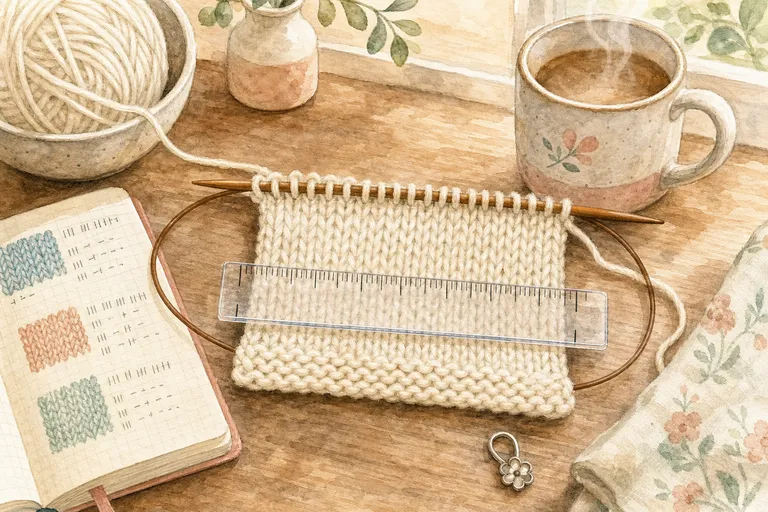
A gauge swatch is a small square of fabric you make before starting a project. You use the same yarn, stitch pattern, and hook or needle size you plan to use for the real thing. Then you measure how many stitches and rows fit into a set distance — usually 4 inches or 10 cm.
That measurement tells you whether your hands, yarn, and tools are producing the same fabric the pattern designer intended.
A gauge swatch is not a pop quiz. It’s a conversation between you, your yarn, and your needles about what kind of fabric you’re about to make together.
Why gauge matters
Gauge is the difference between “this fits perfectly” and “this has become a blanket with sleeves.” It matters most when size matters: sweaters, socks, hats, mittens, fitted cardigans, and anything with sleeves that should end near your wrists instead of somewhere near your snack plate.
It matters less for scarves, shawls, dishcloths, and blankets where “approximately right” can be perfectly fine. But even then, gauge tells you about drape. A scarf knit at a tighter gauge might feel stiff. A shawl worked too loosely might snag on jewelry, door handles, and life itself.
The sneaky thing is that gauge is personal. Two makers can use the same yarn, the same needles, and the same pattern and still get different numbers. One knits tight. One crochets loose. Both are normal. The swatch tells you which version your hands are making today.
How to knit a gauge swatch
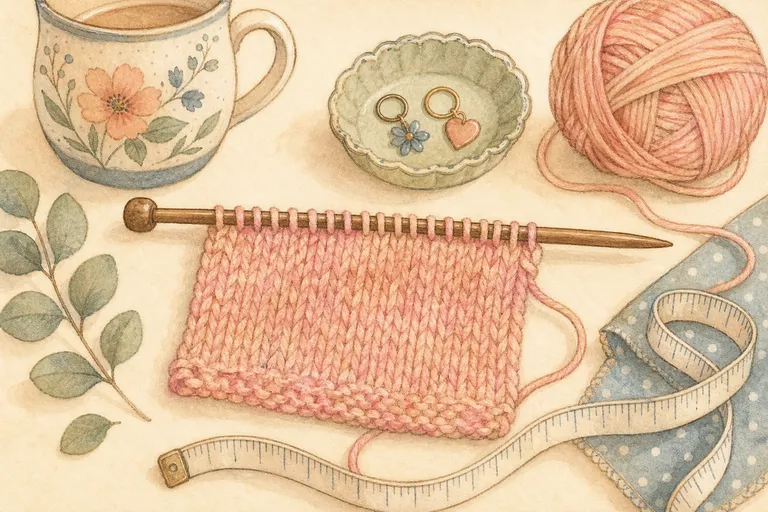
1. Cast on more stitches than the pattern gauge
If the pattern says 20 stitches = 4 inches, do not cast on 20 stitches and call it done. Edge stitches are weird. They curl, stretch, and generally act like they have not signed the same agreement as the middle stitches.
Make the swatch at least 5 to 6 inches wide so you can measure the calm middle section. If the pattern gauge is 20 stitches over 4 inches, casting on around 30 to 35 stitches is a better starting point.
2. Use the actual stitch pattern
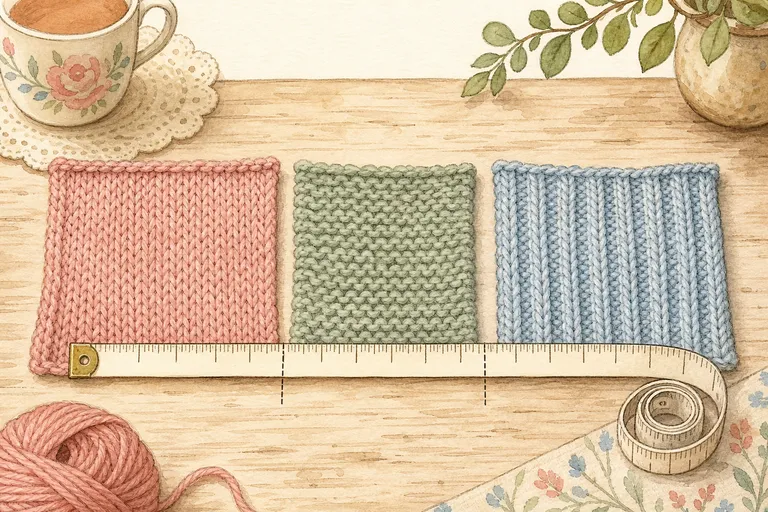
If the pattern gauge is in stockinette, swatch in stockinette. If it uses cables, lace, ribbing, or a textured crochet stitch, use that. Different stitch patterns produce different measurements. Cables pull in. Lace opens up. Ribbing contracts like it knows something.
For crochet, use the exact stitch the pattern specifies. A single crochet swatch will not tell you much about a double crochet sweater.
3. Make it tall enough
Work enough rows to make a proper square — again, ideally at least 5 to 6 inches tall. The bigger swatch gives you a better measurement zone and a better feel for the finished fabric.
4. Block it the way you’ll wash the project
Wash or wet the swatch the same way you plan to treat the finished item. If the sweater will be hand-washed and laid flat, do that. If the blanket is going in the machine, test that.
Yarn changes after washing. Superwash wool can grow. Cotton can relax. Alpaca can stretch. A swatch that measured perfectly before blocking might tell a different story once it dries.
5. Measure the middle
Lay the dry swatch flat. Put your ruler in the center, not along the edges. Count how many stitches fit across 4 inches, then count how many rows fit across 4 inches.
Measure in two spots if you can. If the numbers match, great. If they don’t, your tension may have shifted while you worked, which is also useful information.
What to do when gauge is off
If you have more stitches than the pattern says in 4 inches, your gauge is too tight. Your stitches are smaller than the designer’s. Go up a needle or hook size.
If you have fewer stitches than the pattern says, your gauge is too loose. Your stitches are bigger. Go down a needle or hook size.
If your stitch gauge matches but your row gauge is a little off, you can often work to a length measurement instead of a row count. Row gauge matters more for shaped pieces like yokes, raglans, armholes, and anything where the pattern says to work a specific number of rows before shaping.
And yes, if you change needle or hook size, you should make another swatch. I know. Nobody asked fiber arts to include this much paperwork.
Crochet gauge notes
Crochet gauge works the same way: make a swatch, block it, measure the middle. Crochet stitches are often taller and wider than knit stitches, so the numbers will look different.
If your project is worked in the round — hats, amigurumi, some bags — swatch in the round when gauge really matters. Flat crochet and round crochet can behave differently.
Crochet also tends to use more yarn than knitting for the same area, so gauge can affect yardage fast. If you’re substituting yarn or using stash yarn, check the Yarn Yardage Estimator before you enter the final-row panic zone.
How Knotledge tools help
Gauge connects to almost every practical project decision:
- Use the Hook & Needle Converter when a pattern uses a sizing system you don’t recognize.
- Use the Project Size Converter when you want to understand how gauge changes the finished dimensions.
- Use the Yarn Yardage Estimator when your gauge or yarn substitution might change how much yarn you need.
A swatch gives you the numbers. The tools help you decide what those numbers mean.
Gauge swatch FAQ
Do I really need to block my swatch?
For fitted garments and anything where size matters: yes. For scarves, dishcloths, and low-stakes projects, you can sometimes get away with a quick raw measurement. But blocking gives you better information about how the fabric will behave after washing.
How big should a gauge swatch be?
Aim for at least 5 by 5 inches, preferably 6 by 6. You want enough fabric to measure 4 inches in the middle without touching the edges.
Can I reuse the yarn?
Yes, but keep the swatch until the project is finished if you can. It’s a useful reference if something starts looking suspicious halfway through.
What if my fabric feels wrong even though the numbers match?
Trust your hands. Gauge numbers matter, but so does fabric. If the fabric feels stiff, limp, scratchy, or too open, try another needle or hook size and decide whether the yarn and pattern are actually friends.
The practical takeaway
A gauge swatch is not a test you can fail. It’s information you gather before committing to a project with hundreds or thousands of stitches.
Make it bigger than you think. Block it honestly. Measure the middle. If the numbers are off, adjust before you start the real project.
And if you skip the swatch and everything works out anyway? Congratulations. Please know you are living on borrowed luck, and the knitting gods are watching.
Continue exploring with
Hook Needle Converter →