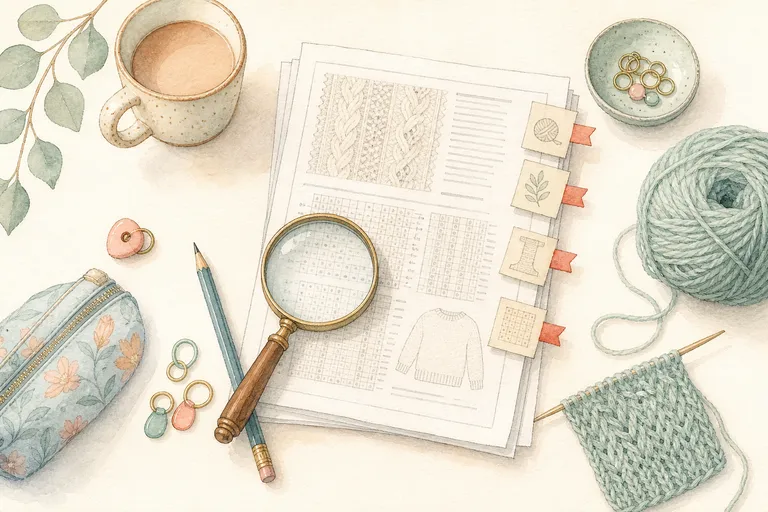
AI generated knitting patterns can look polished at first glance: pretty model photos, cheerful descriptions, tidy PDFs, and prices that feel almost too good to skip. The problem usually shows up later, when the stitch counts don’t line up, the construction is vague, or the finished project couldn’t reasonably match the picture.
This guide is not about witch-hunting designers or calling every unusual photo fake. It’s a practical checklist for spotting possible warning signs before you buy or download a pattern. None of these clues is a guarantee on its own, but several together are a good reason to slow down, ask questions, or choose a more proven pattern.
Quick answer: how to spot AI knitting patterns
To spot possible AI knitting patterns, look for a cluster of red flags: unrealistic photos, missing project samples, vague sizing, impossible construction, generic descriptions, suspicious shop behavior, and no evidence that real knitters have made the design. Before buying, check the designer’s history, project photos, reviews with details, errata*, gauge information, and whether the pattern includes clear yarn, needle, sizing, and finishing instructions.
*In knitting and crochet, errata refers to a list of errors found in a published pattern along with the corrected instructions.
1. Look closely at the photos
Images are often the first clue, especially when a listing relies on one perfect lifestyle shot instead of real project documentation.
Possible photo red flags include:
- Stitches that blur, melt, or change direction when you zoom in
- Cables, lace, colorwork, or ribbing that don’t follow a repeatable structure
- Hands, needles, buttons, seams, or collars that look distorted
- Fabric that behaves strangely, such as a thick sweater draping like silk
- A garment shown only from the front, with no back, side, flat-lay, or detail shots
- Many listings in the same shop using different models, rooms, lighting, and photo styles
Real designers can use mockups, styled shoots, or imperfect photography, so one odd image is not proof of anything. What you want is supporting evidence: close-ups, alternate angles, tester photos, or finished-object photos from other makers.
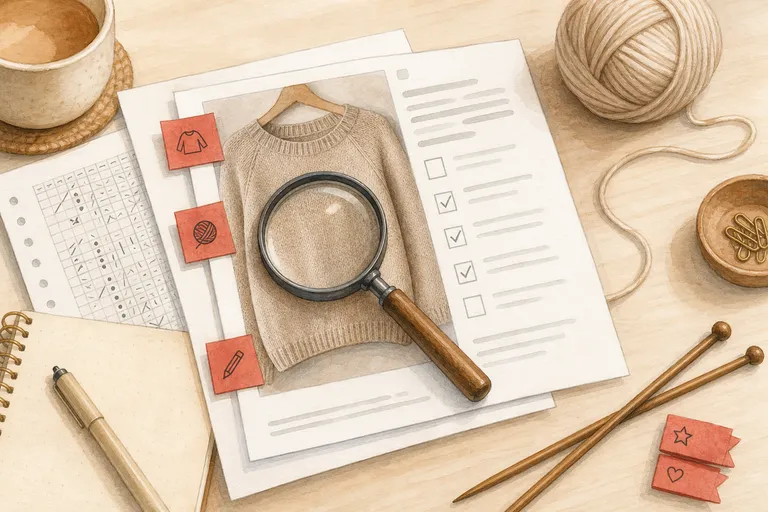
One odd clue is a pause button, not a verdict. Look for a cluster before you bail.
2. Check whether the pattern math makes sense
A real knitting pattern should give you enough information to understand what you are making before you cast on. You don’t need every line of the PDF in the listing, but the basics should be clear.
Look for:
- Yarn weight and approximate yardage or meterage
- Needle size and gauge
- Finished measurements, not just general sizes like small, medium, large
- Skill level with specific techniques listed
- Construction notes, such as top-down raglan, seamed panels, circular yoke, or flat scarf
- Photos that match the described construction
Be careful with patterns that promise every size, every yarn weight, or every skill level without explaining how. A pattern that says it works for babies, adults, blankets, sweaters, beginners, and experts all at once might be using broad marketing language instead of real pattern information.
3. Read the description for useful specifics
AI generated knitting patterns often sound warm and confident while saying very little. The description may be full of cozy phrases but light on practical details.
Pattern seller red flags include descriptions that:
- Repeat generic phrases like “elevate your handmade wardrobe” without explaining the design
- Don’t name the techniques used
- Avoid showing gauge, measurements, or materials
- Claim the pattern is “perfect for all knitters” with no difficulty notes
- Use inconsistent terms, like calling one item a cardigan, pullover, and shawl in the same listing
- Mention crochet details in a knitting pattern, or knitting details in a crochet pattern
A human-first knitting pattern usually helps you decide whether the project fits your yarn, skill level, body, and time. It should feel like a maker is trying to set you up for success, not just decorate a product page.
4. Look for proof that real people have made it
One of the best ways to avoid fake knitting patterns is to look for community signals. Has anyone actually finished the project? Are there notes, photos, questions, or corrections?
Before buying, check for:
- Project pages on Ravelry or another community site
- Tester or sample knitter photos
- Reviews that mention the knitting experience, not just instant download delivery
- Comments about fit, gauge, yardage, or clarity
- Errata or updates from the designer
- Social posts showing work in progress, blocking, seams, or alternate yarns
A brand-new pattern may not have many projects yet, and independent designers often start small. That’s okay of course. In that case, look at the designer’s broader history: other patterns, past projects, tutorials, newsletters, or shop updates.
5. Check the designer or shop history
A trustworthy pattern seller usually leaves a trail of making. It doesn’t have to be fancy. A simple blog, Instagram grid, Ravelry profile, email list, or shop page with consistent work can be enough.
Slow down if you see several of these together:
- Dozens of complex patterns uploaded in a short period
- Many different design styles with no clear point of view
- No designer name, bio, social presence, or contact information
- Nearly identical listing copy across many products
- Reviews that only say “downloaded fine” and never mention knitting the item
- Very low prices for large bundles of highly detailed garments
Price alone is not proof. Designers run sales, older patterns may be discounted, and simple accessories can be inexpensive. The concern is the whole pattern: a huge catalog, little maker evidence, generic copy, and no finished-project trail.
6. Be cautious with impossible promises
Some listings try to remove every bit of friction from knitting: no gauge worries, any yarn, any size, instant perfect fit. That sounds lovely, but knitting has real constraints.
Treat these as warning signs, not guarantees:
- “No gauge needed” for a fitted garment
- “Use any yarn” without explaining how to adjust stitch counts
- “One size fits all” for sweaters, socks, hats, or gloves
- “Beginner friendly” paired with complex lace, cables, shaping, or colorwork and no tutorials
- Huge size ranges with no schematic or finished measurements
- Finished photos that show details the instructions never mention
Good patterns can be flexible. They can also be beginner-friendly. The difference is that they explain the tradeoffs and give you a path to a good result.
What to do before buying or downloading a pattern
Use this short pre-purchase checklist when a pattern looks tempting but you aren’t sure.
- Zoom in on every photo. Do the stitches, seams, shaping, and finishing look physically possible?
- Read the materials list. Does it include yarn weight, yardage, needle size, notions, and gauge?
- Check sizing. Are finished measurements or a schematic provided?
- Search the designer’s name. Can you find a maker presence outside one marketplace listing?
- Look for real projects. Search Ravelry, social media, reviews, and tagged posts.
- Read the reviews carefully. Prioritize reviews from people who actually made the item.
- Check for pattern support. Is there an email address, update history, errata page, or shop policy?
- Compare the promise to the price. A bargain is fine; a massive bundle of complex designs with no evidence deserves caution.
- Save the listing before purchase. Screenshots can help if the listing changes or you need a refund.
- When in doubt, choose a pattern with more maker evidence.
How to find real knitting patterns
If you want to find real knitting patterns more reliably, start where finished projects are visible. Community-vetted sources are not perfect, but they make it easier to see whether a design has been knitted by actual people.
Good signals include:
- Multiple finished projects from different makers
- User photos in different yarns, sizes, and lighting
- Helpful project notes about modifications or fit
- Active designer responses to questions
- Clear updates when mistakes are found
- Consistent design style across the designer’s work
You can also use Knotledge’s Pattern Finder to search with community-signal filters and surface patterns with more evidence behind them. It can’t perfectly detect AI, and it shouldn’t be treated as a final verdict. Think of it as a helpful starting point for finding human-first knitting patterns with stronger trust signals.
If you already bought a questionable pattern
First, take a breath. A confusing pattern is frustrating, but it doesn’t mean you did anything wrong. Even experienced knitters get fooled by polished listings.
Try this:
- Check whether there is an updated file, errata page, or support email
- Search the pattern name to see if other knitters have posted notes
- Compare the instructions against the photos and listing details
- If the pattern is unusable, contact the seller calmly with specific issues
- Use the marketplace refund or dispute process if the file was misleading
- Leave a factual review focused on your experience, not accusations
Clear, specific feedback helps other makers more than angry speculation. For example: “The pattern didn’t include gauge or finished measurements, and the sleeve stitch counts didn’t match the body instructions” is much more useful than “This is definitely AI.”
The goal: less slop, more successful knitting
The point isn’t to police every designer or chase perfect certainty. The goal is to protect your knitting time, your yarn budget, and the joy of making something that actually works.
When you are learning how to spot AI knitting patterns, remember the cozy rule of thumb: one warning sign means look closer; several warning signs mean pause; no real maker evidence means consider walking away. Your future self, halfway through a sleeve with stitch counts that actually add up, will be grateful.
Continue exploring with
Pattern Finder →