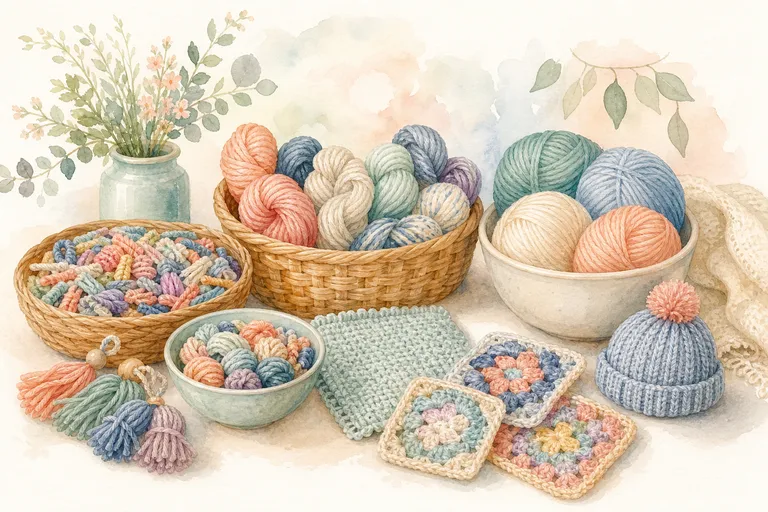
Every maker has a yarn stash with a little folklore in it: half a skein from the perfect hat, three mystery balls with no labels, sock yarn leftovers in excellent colors, and that one beautiful single skein you bought because apparently restraint was out of stock.
Stash busting is not just “make a blanket and hope for the best.” The best stash buster ideas start with what you actually have: the yarn weight, the yardage, the fiber, and whether the colors want to cooperate or need supervision.
Use this guide to choose leftover yarn projects by amount and weight, so your scraps can become useful, giftable, Pinterest-worthy projects instead of a decorative basket of guilt.
Quick Answer: What to Make With Leftover Yarn
If you’re wondering what to make with leftover yarn, start by sorting your scraps into yarn weight and approximate amount. Tiny scraps are best for embellishments, ornaments, mending, stripes, and colorwork details. Partial skeins work well for hats, mitts, cowls, dishcloths, small toys, squares, and baby accessories. Full single skeins are ideal for one skein projects like shawlettes, cowls, socks, hats, bags, and lightweight scarves.
For larger mixed stashes, choose modular projects: granny squares, mitered squares, striped blankets, scrappy scarves, log cabin blankets, temperature-style projects, and color-blocked sweaters. Modular projects are forgiving because you can add yarn as you find it, which is a very polite way of saying “as it falls out of the closet.”
Need a faster match for your exact stash? Try the Stash Buster Ideas tool and enter the yarn amount, weight, and project type you want.
Start Here: Sort Your Stash Before Choosing a Project
Before picking a pattern, give the stash a quick reality check. This does not need to become a full archaeological dig. You just need enough information to avoid starting a scarf with 37 yards of yarn and optimism.
Sort by:
- Yarn weight: lace, fingering, sport, DK, worsted, bulky, super bulky, or mystery.
- Amount: tiny scraps, small balls, half skeins, full skeins, or sweater-quantity leftovers.
- Fiber: wool, cotton, acrylic, alpaca, blends, or unknown.
- Care needs: machine washable, hand wash, or “label missing, proceed carefully.”
- Color family: neutrals, brights, pastels, earth tones, variegated, or chaos gremlin.
If the label is gone, estimate the weight before you choose a project. The Yarn Weight Converter can help you translate yarn terms and compare common weight names. If you know the weight of the ball in grams but not the yardage, the Yarn Yardage Estimator can help you make a practical guess.
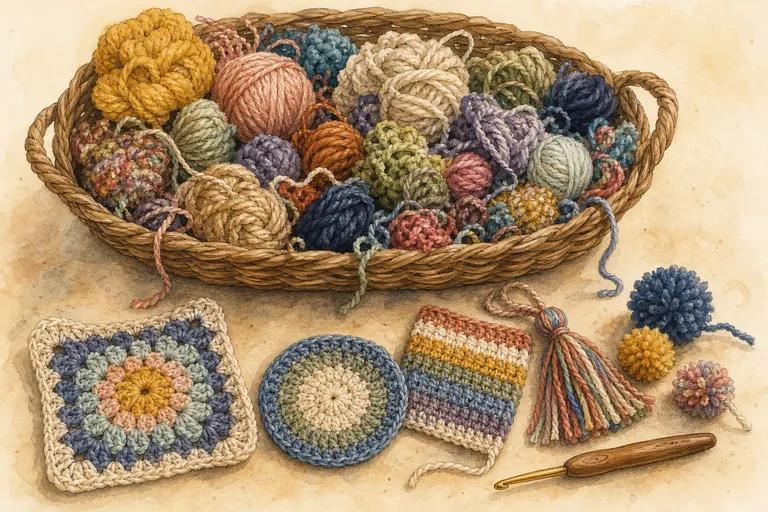
Sort by weight and amount first. The project ideas get much less dramatic after that.
Stash Buster Ideas by Yarn Amount
The easiest way to choose a project is by amount. A six-yard scrap and a 220-yard partial skein both count as leftover yarn, but they are not applying for the same job.
Tiny Scraps: Under 10 Yards
These are the bits that feel too pretty to throw away and too small to justify their own storage system. Use them for details, accents, and quick decorative projects.
Good tiny scrap yarn projects:
- Pom-poms for gift wrap, garlands, hats, and baskets
- Tassels for bookmarks, shawls, zipper pulls, and ornaments
- Crochet flowers, leaves, stars, hearts, and appliques
- Duplicate stitch or embroidery on knitted hats and sweaters
- Visible mending on socks, elbows, mittens, and blankets
- Amigurumi faces, cheeks, tiny scarves, or toy details
- Scrap ties for bundling cords, tags, or handmade gifts
- Small color pops in granny squares or striped projects
Best yarn weights: any, though smooth DK and worsted are easiest for appliqués. Fingering and sock scraps are excellent for embroidery and duplicate stitch.
Practical tip: keep a small jar for scraps under 10 yards. If the jar is full, it’s time for tassels, not another bigger jar. Ask me how I know.
Small Balls: 10 to 50 Yards
This is the sweet spot for useful little makes. You have enough yarn to make something satisfying, but not enough to wander into project denial.
Try these leftover yarn projects:
- Coasters or mug rugs
- Face scrubbies or makeup remover pads in cotton
- Mini ornaments and holiday decorations
- Coffee cup sleeves
- Small amigurumi pieces
- Baby booties, depending on weight and size
- Stripes in hats, cowls, mittens, or socks
- Contrast cuffs, heels, toes, or brims
- Crochet granny squares or knit mitered squares
- Bookmarks in cotton, linen, or smooth wool
Best yarn weights: cotton worsted for scrubbies and coasters; fingering for sock accents; DK and worsted for squares, ornaments, and cup sleeves.
If you have several 10–50 yard balls in the same weight, treat them like one bigger project. A pile of little DK leftovers can become a striped cowl, a set of coasters, or the beginning of a very charming blanket square situation.
Partial Skeins: 50 to 150 Yards
Partial skeins are where stash busting gets fun because you have enough yarn to make actual accessories and giftable projects. This is also where checking yardage matters. Fifty yards of bulky yarn and fifty yards of fingering yarn are very different creatures.
Good 50–150 yard stash buster ideas:
- Knit or crochet hats, especially for children
- Ear warmers and headbands
- Fingerless mitts or wrist warmers
- Small cowls
- Dishcloths and washcloths in cotton
- Soap savers and bath mitts
- Small baskets in worsted or bulky yarn
- Pet bandanas or small pet blankets
- Doll clothes and toy accessories
- Color-blocked scarf sections
- Granny square bundles for a future blanket
Best yarn weights: worsted and bulky for quick accessories; cotton DK or worsted for kitchen and bath projects; fingering for mitts, socks accents, and lightweight accessories.
Practical tip: if a project needs stretch, avoid cotton unless the pattern is designed for it. Cotton dishcloth? Perfect. Cotton ribbed ear warmer? It may stretch out and live a new life as a small, confused necklace.
One Skein Projects: 150 to 450 Yards
Single skeins are the stash category that whispers, “I am special.” Sometimes they are. Sometimes they are 212 yards of discontinued merino in a color called Foggy Plum Incident. Either way, one skein projects are your friend.
What to make with one skein of yarn:
- Beanies and slouchy hats
- Cowls and neck warmers
- Shawlettes and bandana cowls
- Socks from fingering or sport yarn
- Fingerless mitts
- Small scarves or keyhole scarves
- Market bags in cotton or linen blends
- Baby hats, booties, and small cardigans
- Amigurumi animals or plushies
- Crochet baskets or plant cozies
Best yarn weights: fingering for socks and shawlettes; DK for cowls, mitts, and baby items; worsted for hats and baskets; bulky for fast cowls and warm accessories.
Before you commit, check the pattern yardage and give yourself a buffer. A pattern that calls for 200 yards and your skein has 201 yards is not a plan; it is a tiny thriller.
Multiple Leftovers: 450+ Yards Total
When you have several partial skeins in compatible weights, you can make larger projects. The trick is choosing a structure that welcomes color changes instead of looking like you ran out of yarn thirteen times. Even if you did. We are not here to confess.
Good larger scrap yarn projects:
- Striped blankets
- Granny square blankets
- Mitered square blankets
- Log cabin blankets
- Scrappy shawls
- Color-blocked cardigans
- Striped pullovers
- Patchwork scarves
- Crochet hexagon blankets
- Modular bags
- Scrap yarn wall hangings
Best yarn weights: fingering for lightweight shawls and sock yarn blankets; DK and worsted for blankets and garments; bulky for fast home projects if the finished weight will not become furniture.
Practical tip: for blankets, use one consistent neutral between scraps if your colors feel unruly. Cream, gray, oatmeal, navy, and charcoal can make random leftovers look intentional, which is basically the whole dream.
Stash Buster Ideas by Yarn Weight
Yarn amount tells you project size. Yarn weight tells you what kind of fabric you can make. This is the difference between “cute drapey shawl” and “stiff triangular potholder with delusions.”
Fingering and Sock Yarn Leftovers
Fingering weight scraps are small but mighty. They are great for lightweight projects, colorwork, and detailed accessories.
Try:
- Scrappy socks with contrast cuffs, heels, and toes
- Sock yarn blanket squares
- Lightweight shawlettes
- Striped baby hats
- Colorwork yokes or motifs
- Mini mitts
- Bookmarks
- Tiny amigurumi details
- Tassels and embroidery
Planning note: sock yarn scraps often play well together because many are machine washable wool blends. Still, check fiber content if you are mixing superwash wool, nylon, cotton, and alpaca.
Sport and DK Leftovers
Sport and DK are wonderfully flexible for stash busting. They are light enough for wearables and substantial enough for home projects.
Try:
- Baby sweaters and hats
- Fingerless mitts
- Color-blocked cowls
- Lightweight beanies
- Small shawls
- Granny squares
- Striped scarves
- Amigurumi with a smaller hook
- Patchwork cardigans
Planning note: DK scraps are excellent for cohesive gift sets. A hat, mitts, and cowl can look planned if you repeat the same stripe order or use one main color to tie everything together.
Worsted and Aran Leftovers
Worsted weight yarn is the workhorse of yarn stash ideas. It works up quickly, is easy to mix, and is useful for both knitting and crochet.
Try:
- Hats
- Ear warmers
- Mittens and fingerless gloves
- Dishcloths in cotton
- Baskets
- Mug rugs
- Amigurumi
- Granny square blankets
- Log cabin blankets
- Pet mats
- Cushion covers
Planning tip: worsted leftovers can get heavy in large projects. If you are making a blanket, weigh your growing project occasionally and consider whether you want cozy warmth or a weighted blanket with a craft origin story.
Bulky and Super Bulky Leftovers
Bulky leftovers are great for fast, textured projects, but they need enough yardage to be useful. Ten yards of super bulky is not a cowl. It’s a very confident noodle.
Try:
- Chunky headbands
- Quick cowls
- Basket bases
- Plant pot covers
- Textured pillow panels
- Small rugs or mats
- Boot cuffs
- Big tassels
- Statement stripes in blankets
Planning note: bulky yarn is harder to blend neatly with thinner yarns. If you want to combine weights, use bulky yarn as a border, fringe, surface crochet, or a separate section instead of forcing it into the same stitch pattern.
How to Mix Leftover Yarn Without Making It Look Random
Random can be beautiful. Random can also look like the project was assembled during a power outage. A little structure helps.
Try one of these color strategies:
| Strategy | How it works | Best for |
|---|---|---|
| Tonal gradient | Arrange scraps from light to dark in one color family | Shawls, scarves, blankets |
| Repeating neutral | Add cream, gray, navy, black, or oatmeal between colors | Blankets, sweaters, squares |
| Planned stripe order | Repeat the same color sequence until yarn runs out | Cowls, hats, scarves |
| Warm/cool split | Keep warm colors together and cool colors together | Sets, accessories, patchwork |
| One wild skein rule | Let one variegated yarn be the star and keep the rest quiet | Cowls, shawls, hats |
| Full joyful chaos | Use everything with confidence | Scrap blankets, kids’ projects, maximalist makes |
If you are using variegated yarn, pair it with solids or semi-solids. Two busy yarns together can be delightful, but they can also visually wrestle in the driveway.
How to Combine Different Yarn Weights
You can mix yarn weights, but it works best when you do it intentionally. The safest approach is to keep each project mostly within one weight category.
Better ways to combine different weights:
- Use thinner yarns held double to approximate a thicker yarn.
- Use different weights in separate blocks or panels.
- Use bulky yarn for borders, edging, handles, or fringe.
- Use lace or mohair held with another yarn for halo and softness.
- Make a modular project where each square can be blocked to the same size.
Avoid mixing very different weights in fitted garments unless you are following a pattern designed for it. A sweater with fingering sleeves, bulky stripes, and a dream is technically possible, but so is carrying a lasagna in a tote bag. Structure matters.
If you are unsure what your mystery yarn equals, check weight terms with the Yarn Weight Converter before you start.
Best Stash Buster Projects for Gifts
Stash busting is especially good for gifts because small projects feel thoughtful without requiring a month of evenings and a heroic amount of yarn.
Giftable leftover yarn projects:
- Cotton dishcloth sets tied with scrap yarn
- Cozy coffee sleeves with a favorite button
- Matching hat and mitt set from partial skeins
- Crochet plant cozies
- Mini baskets filled with tea, stitch markers, or candy
- Bookmarks for readers
- Ornaments for holiday packages
- Baby hats from soft washable leftovers
- Scrappy cowls in a planned palette
For gifts, choose yarn that can survive real life. Machine washable is usually safest for babies, kitchens, pets, and anyone who does not own a blocking mat and a deep emotional connection to wool wash.
Best Stash Buster Projects for Crochet
Crochet is excellent for scrap yarn projects because motifs, stripes, and small shapes are easy to join as you go.
Crochet stash buster ideas:
- Granny squares
- Hexagons
- Scrap blankets
- Amigurumi
- Coasters
- Dishcloths
- Baskets
- Market bags
- Plant hangers
- Scrunchies
- Mug cozies
- Borders for plain blankets or towels
Crochet often uses more yarn than knitting for the same size fabric, so check yardage if you’re working with a limited partial skein. If you are close, choose a smaller hook only if the fabric still feels right.
Best Stash Buster Projects for Knitting
Knitting is especially good for wearable stash projects, soft stripes, and lightweight accessories.
Knitting stash buster ideas:
- Scrappy socks
- Striped hats
- Fingerless mitts
- Cowls
- Shawlettes
- Mitered square blankets
- Log cabin blankets
- Baby sweaters
- Colorwork hats
- Patchwork scarves
- Contrast cuffs and hems
Knitted stripes are one of the easiest ways to use odd amounts of yarn. If your colors are uneven, make the stripe widths uneven on purpose. Intentional asymmetry looks a lot better than almost-symmetry that gives up halfway through.
A Simple Stash Busting Workflow
When you are ready to use the yarn instead of just visiting it, follow this order:
- Pick one yarn weight. Start with the biggest group in your stash.
- Estimate the total yardage. Add labels if you have them, or weigh the yarn and estimate.
- Choose the project size. Tiny, accessory, one skein, or large modular project.
- Choose the color strategy. Gradient, neutral separator, planned stripes, or joyful chaos.
- Check fiber and care. Don’t mix hand-wash alpaca into a toddler blanket unless you enjoy dramatic laundry.
- Swatch if size matters. Hats, mitts, socks, garments, and bags need more accuracy than ornaments.
- Leave a buffer. Especially for borders, cuffs, ribbing, and final rows.
If you want a project suggestion without doing all the matching yourself, use Stash Buster Ideas. For yardage uncertainty, check the Yarn Yardage Estimator before you start playing yarn chicken in public.
FAQ: Leftover Yarn and Stash Buster Ideas
What are the best stash buster ideas for beginners?
The best beginner stash buster ideas are dishcloths, scarves, simple hats, granny squares, coasters, headbands, and basic cowls. Choose smooth worsted or DK yarn if you can because it is easier to see your stitches.
What can I make with very small amounts of leftover yarn?
With very small amounts of leftover yarn, make pom-poms, tassels, ornaments, appliques, bookmarks, visible mending, embroidery, amigurumi details, or contrast stripes in a larger project.
Can I mix different yarn weights in one project?
Yes, but it is easiest in modular projects, borders, fringe, color-blocked sections, or when holding thinner yarns together. For fitted items like sweaters, socks, hats, and mitts, use similar yarn weights and swatch carefully.
What are good one skein projects?
Good one skein projects include hats, cowls, shawlettes, socks, fingerless mitts, baby accessories, small scarves, market bags, baskets, and amigurumi. Always compare your skein yardage with the pattern yardage before starting.
How do I make scrap yarn projects look intentional?
Use a simple rule: repeat a neutral color, arrange scraps in a gradient, repeat stripe order, separate warm and cool colors, or let one variegated yarn be the focus. A little repetition makes leftover yarn projects look designed instead of accidental.
The Practical Takeaway
Stash busting works best when you stop asking “What can I make with this random yarn?” and start asking “How much do I have, what weight is it, and what kind of fabric does it want to become?”
Sort the yarn, choose by amount and weight, add one simple color strategy, and your stash will start turning into useful projects. Maybe not all of it. Let us remain emotionally realistic. But enough to make room for the next irresistible skein.
Related tools: Stash Buster Ideas · Yarn Weight Converter · Yarn Yardage Estimator
Continue exploring with
Stash Buster Ideas →